


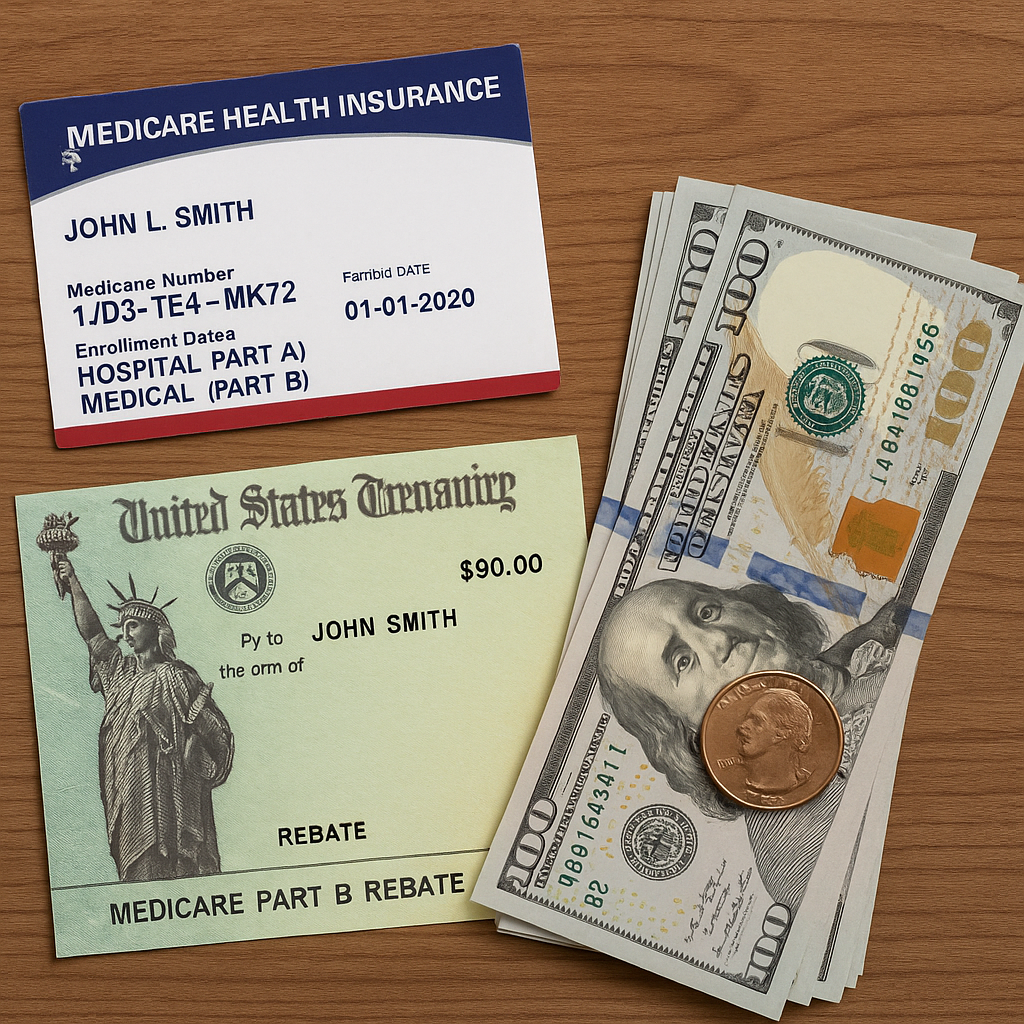
Introduction: Understanding the $90 Medicare Part B Rebate
The Medicare $90 rebate is a one-time reimbursement tied to Part B premiums already paid, not an ongoing discount, a new plan, or something you need to enroll in separately. A one-time $90 payment tied to your Medicare Part B premium has been circulating in recent news, and it has left many beneficiaries wondering whether it applies to them. It is worth noting upfront that this claim has not been officially confirmed by CMS or Social Security, and much of what is circulating appears to stem from unverified reports rather than an official announcement. News about Medicare, even welcome news, can feel unsettling when you are also trying to sort out which plan fits your doctors, prescriptions, and budget.
This kind of announcement often lands at the same time people are reviewing their coverage or approaching their 65th birthday, which adds another layer of decisions to think through.
This guide walks through what the rebate actually is, who qualifies, how payment works, and how to verify your status safely, so you can make sense of it before you act on anything.
Key Takeaways
- The $90 payment is a one-time rebate tied to Part B premiums already paid, not an ongoing discount or new monthly premium reduction
- The standard 2026 Part B premium remains $202.90 per month regardless of the rebate
- Eligibility depends on factors like Part B enrollment period, how your premium was paid, and residency status, not automatically on having Part B
- Having a Medicare Advantage or Medigap plan does not generally disqualify you from the rebate
- Payment may arrive via direct deposit, mailed check, or credit to your Social Security benefit, with timing varying by individual
What the $90 Premium Rebate Actually Means for Your Coverage
At its core, the $90 rebate is a one-time payment connected to what you have already paid toward your Part B premium. It is not a discount applied going forward, and it does not lower your monthly premium permanently.
It also is not a new insurance product, a plan change, or something you need to enroll in separately. It is simply a reimbursement tied to premium amounts already collected. This should not be confused with the Part B Giveback Benefit, a feature offered by some Medicare Advantage plans in which the plan covers some or all of a member's monthly Part B premium on an ongoing basis. The $90 rebate discussed here is a separate, one-time matter, and beneficiaries should verify any specific claim about it directly with <a href="https://www.ssa.gov">Social Security</a> or <a href="https://www.cms.gov">CMS</a> rather than assuming it is the same as the Part B Giveback Benefit.
Quick Fact
If you are also comparing Medicare Advantage, Medigap, or Part D drug plans right now, it helps to keep this rebate separate in your mind from those decisions. The rebate does not affect which plan type is right for you, your provider network, or your prescription coverage. Treat it as a financial detail, not a factor in choosing coverage.
Are You Eligible? Clearing Up Common Confusion About Qualification
Eligibility generally depends on a few straightforward factors: whether you were enrolled in Part B during the relevant period, whether your premium was paid directly rather than deducted automatically, and your residency status at the time.
A common misunderstanding is assuming that everyone with Part B automatically qualifies. In reality, the rebate is often tied to specific circumstances, such as how your premium was billed or a particular enrollment window. For the most accurate and current information on any such rebate program, confirm details directly through <a href="https://www.ssa.gov">SSA.gov</a> or <a href="https://www.cms.gov">CMS.gov</a> rather than relying on secondhand reports.
Common Mistake
Do not assume you qualify just because you have heard about the rebate. Verify your specific situation through official channels before expecting a payment.
Some people also mistakenly believe they are excluded because they have a Medicare Advantage plan or a Medigap policy, when in fact plan type usually has little to do with rebate eligibility. If you are still reviewing your coverage options, understanding this distinction can prevent confusion about what the rebate does and does not say about your plan choice.
Payment Timeline: When and How You Will Receive Your Rebate
Distribution of a rebate like this typically follows a set schedule, though individual timing can vary based on how your premium is paid and processed. Some beneficiaries receive payment sooner than others simply due to batch processing schedules.
Payment methods generally include direct deposit to a bank account on file, a mailed paper check, or a credit applied toward your Social Security benefit if your premium is deducted from that payment.
| Method | How It Works | What to Watch For |
|---|---|---|
| Direct deposit | Sent to the bank account on file with Social Security | Confirm your account details are current |
| Mailed check | Sent to your address on record | Allow extra time for postal delivery |
| Social Security credit | Applied to your monthly benefit payment | Check your benefit statement for the adjustment |
If the expected timeline passes and you still have not received anything, the next step is to contact Social Security directly rather than relying on secondhand information or unofficial sources.
Helpful Resource
You can check your benefit and payment details directly through your online Social Security account for the most accurate status update.
Worried About Costs? How the Rebate Fits Into Your Overall Medicare Budget
It is understandable to feel uncertain about premiums, deductibles, and out-of-pocket costs, especially when a new dollar figure like this enters the conversation. A $90 one-time rebate is a small piece of a much larger financial picture.
Compare it to ongoing costs you face every year, which have a far greater impact on your yearly budget than a single rebate payment:
2026 standard Part B premium: $202.90 per month, according to <a href="https://www.cms.gov">CMS.gov</a>
2026 Part B annual deductible: $283, according to <a href="https://www.cms.gov">CMS.gov</a>
2026 Part D maximum annual deductible: $615, according to <a href="https://www.cms.gov">CMS.gov</a>
2026 Medicare Advantage maximum out-of-pocket limit: $9,250, as reported by <a href="https://www.cms.gov">CMS.gov</a>
Keep Perspective
Focusing too much on a small savings opportunity can distract from the decisions that truly shape your costs, like whether your prescriptions are covered under your Part D formulary or whether your preferred doctors are in network. Those choices affect your wallet every month, not just once.

I always tell people not to let a one-time rebate drive their Medicare decisions. It is generally wise to review your full coverage carefully, since overlooking a plan change could affect your costs over time. Focus your energy on comparing your full coverage picture, not just the headline-grabbing number.
How to Verify Your Rebate Status Without Falling for Scams
The safest way to check your rebate status is through official channels, such as your online Social Security account or a direct call to Social Security using the number on your official mail.
You can also confirm general Medicare cost and premium information directly through <a href="https://www.medicare.gov/basics/costs">Medicare's official cost pages</a>, which outline current premium and deductible figures without requiring personal information upfront.
Scam Warning
Scammers sometimes use rebate announcements as bait, asking for your Medicare number, bank details, or Social Security number over the phone. Medicare and Social Security will never ask for payment to release a rebate, so verify your status only through official channels.
Working with a licensed, trustworthy source you already recognize matters more than ever when news like this spreads quickly.
Making Confident Medicare Decisions Beyond the Rebate
News about a rebate can be a helpful reminder to look at your overall coverage, especially if you are turning 65 soon or have not reviewed your plan in a while. Use this moment as a nudge rather than the main event.
When comparing plans, start with your doctors and prescriptions rather than the premium alone. A lower monthly cost can turn into higher spending later if your medications are not covered well or your specialists are out of network.
List your current doctors and medications before comparing any plan
Check whether your preferred providers are in each plan's network
Review each plan's drug formulary for your specific prescriptions
Compare total costs, including deductibles and out-of-pocket maximums, not just premiums
Ask questions until you feel clear, not just satisfied with a quick answer
A no-pressure conversation with a licensed Medicare agent can help you fill in gaps your own research might miss, especially around plan details that are easy to misread. This kind of support is meant to clarify your options, not push you toward a decision before you are ready.
Frequently Asked Questions About the Medicare $90 Rebate
I want to learn more before I talk to anyone about my Medicare options. Is that okay?
Will I get a pushy sales call if I ask questions about the rebate or my coverage?
Can I figure out my Medicare options and the rebate on my own first?
How do I know which sources to trust for accurate rebate and Medicare information?
Does the rebate affect my Medicare Advantage or Medigap plan choice?
What if I never receive the rebate I believe I qualify for?
Is the $90 rebate taxable income?
Conclusion: Moving Forward with Clarity and Confidence
The $90 Medicare Part B rebate is a one-time payment tied to premiums already paid, not a plan change or a reason to rush any coverage decision. Understanding eligibility, payment timing, and how to verify your status safely helps you approach this news with a clear head.
Take the next step at whatever pace feels right, whether that means continuing your own research or having a no-pressure conversation with a licensed Medicare agent. Either way, informed and confident Medicare decisions are within reach, one clear step at a time.
Related Articles
Have Medicare questions?
Our licensed Medicare agents are available to help you find the right coverage.